
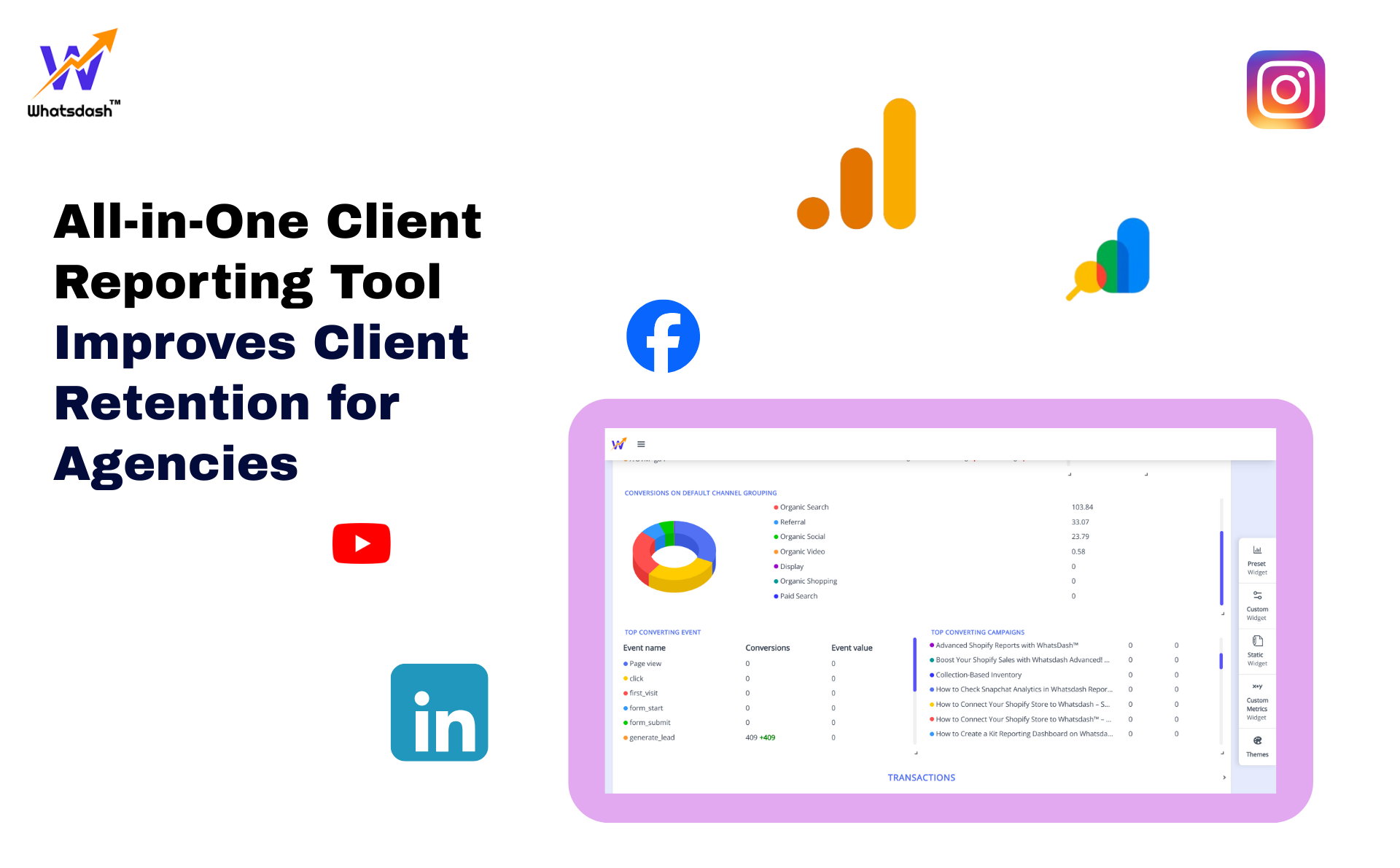
Client retention is always one of the biggest growth levers for marketing agencies. While new client acquisition still gets attention, most agencies now realize that long-term revenue stability comes from keeping existing clients satisfied, informed, and confident in the work being done. One overlooked factor in this equation is how performance is reported and communicated.
An all-in-one client reporting tool has gradually moved from being a “nice to have” to a critical part of modern agency operations. Not because it looks impressive, but because it changes how clients experience results. When reporting becomes clear, consistent, and timely, trust improves—and trust is what keeps clients from churning.
This article explores how unified reporting impacts client retention, using real agency workflows, current platforms, and practical examples—without sales language or exaggerated claims.
Why Client Retention is Still a Reporting Problem
Most agencies don’t lose clients because results are bad. They lose clients because results are misunderstood.
In a typical agency reporting process, data comes from multiple platforms—Google Ads, Meta, GA4, Search Console, LinkedIn, email tools, and SEO software. Each platform speaks a different language. Metrics don’t always align, timelines differ, and attribution often becomes confusing.
Clients, especially in the US market, expect clarity. When reports arrive late, look inconsistent, or require explanation calls every month, confidence slowly erodes. Even strong performance can feel uncertain if the story behind the numbers isn’t easy to follow.
This is where client retention starts to suffer—not due to execution, but due to communication gaps created by fragmented reporting.
Real Agency Workflows and Where They Break Down
In many marketing agencies, reporting still follows a familiar pattern:
- Data is exported manually from multiple tools
- Spreadsheets are copied and adjusted each month
- Slides or PDFs are rebuilt repeatedly
- Account managers spend hours explaining metrics instead of strategy
This approach often works at a small scale. However, as client count increases, cracks appear. Reports become inconsistent across accounts. Important insights get buried under raw numbers. Delivery timelines slip.
From the client’s perspective, reporting starts to feel reactive rather than proactive. Questions like “What actually changed this month?” or “How does this impact my revenue?” go unanswered.
Over time, this lack of clarity contributes directly to churn, especially when clients compare agencies or face budget pressure.
How an All-in-One Client Reporting Tool Changes the Experience
An all-in-one client reporting tool brings data, context, and presentation into a single system. Instead of assembling reports, teams focus on interpreting performance.
When reporting becomes centralized, several shifts happen naturally:
- Consistency improves – Clients see the same structure every month, making trends easier to understand.
- Speed increases – Automated client reports arrive on time, without last-minute scrambling.
- Context becomes clearer – KPIs are grouped logically, reducing confusion.
This shift doesn’t just save internal time. It changes how clients perceive the agency’s maturity and reliability.
Step-by-Step: How Unified Reporting Supports Client Retention
1. Clear Visibility Builds Trust Over Time
When performance data is displayed through a client reporting dashboard, clients no longer need to interpret raw exports. Metrics are presented in a familiar format, making month-over-month changes easier to grasp.
Trust is built when clients feel informed without needing constant explanations. Over time, this transparency reduces skepticism and defensiveness during review calls.
2. Automated Reporting Reduces Gaps and Errors
Manual reporting often introduces inconsistencies—missing data, formatting errors, or delayed delivery. Automated client reporting ensures the same logic is applied consistently and becomes the future of client reporting.
When reports arrive on schedule and reflect real-time or near-real-time data, confidence improves. Clients associate reliability in reporting with reliability in execution.
3. Better Conversations Replace Justification Calls
Agencies often spend review meetings defending numbers instead of discussing strategy. Unified marketing reporting shifts the conversation.
Instead of explaining what happened, discussions move toward why it happened and what should happen next. This positions the agency as a strategic partner rather than a vendor.
4. Performance Trends Are Easier to Communicate
Agency performance reporting becomes more effective when trends are visible across channels. For example, showing how paid search supports organic conversions creates a more complete picture of value.
Clients are less likely to churn when they understand long-term momentum, even during short-term fluctuations.
Client Expectations Around Reporting
US-based clients often expect frequent updates, clean visuals, and fast answers. Many work with internal stakeholders who require quick summaries rather than deep dives.
In this context, a client reporting tool for agencies acts as a bridge between execution teams and decision-makers. Unified dashboards allow agencies to share insights without overwhelming clients.
Platforms commonly included in US agency reporting stacks today include GA4, Google Ads, Meta Ads, LinkedIn Ads, Search Console, and CRM tools. When these platforms are viewed together, attribution becomes clearer and reporting feels more credible.
Reducing Client Churn Through Reporting, Not Promises
Reducing client churn with reporting is less about showcasing wins and more about setting expectations. When reporting clearly shows what is being optimized, tested, and learned each month, clients feel progress—even during plateaus.
Long-term clients rarely expect perfection. They expect honesty, consistency, and clarity.
An all-in-one client reporting tool supports this by creating a single source of truth. It removes guesswork, aligns teams, and ensures clients always know where things stand.
Where Automated Tools Become The Best Fit
Some agencies use platforms like Whatsdash to simplify reporting workflows without rebuilding systems from scratch. In practice, tools like this are often used to consolidate data, automate delivery, and maintain consistency across clients.
When reporting becomes easier internally, more attention can be given to insights and recommendations—areas that directly influence client satisfaction and retention.
The tool itself isn’t the differentiator. The clarity it enables is.
Conclusion
Client retention is rarely improved through aggressive communication or over-promising results. It improves when clients consistently understand what they are paying for and why it matters.
An all-in-one client reporting tool helps agencies move away from fragmented updates toward unified, insight-driven communication. By simplifying the agency reporting process, automating reports, and presenting performance clearly, trust is reinforced month after month.
For marketing agencies looking to improve retention, reduce churn, and strengthen long-term relationships, reporting should no longer be treated as an afterthought. It is part of the client experience—and often the difference between renewal and replacement.