
Client expectations around reporting have changed significantly over the past few years. Marketing results are no longer judged only by outcomes, but by how clearly those outcomes are communicated. Even when campaigns perform well, confusion around numbers, data sources, or timelines often creates friction between agencies and clients.
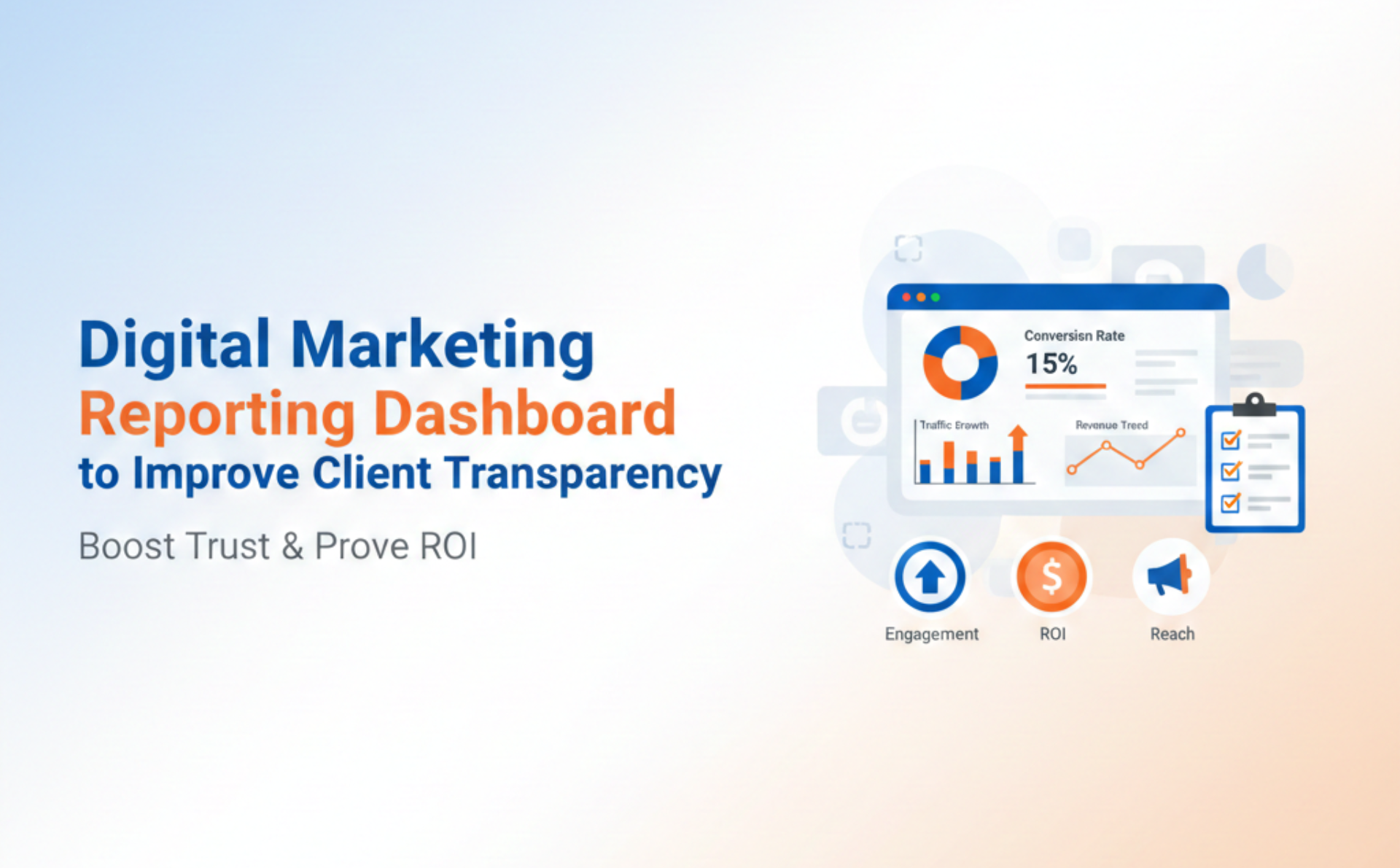
As marketing efforts expand across SEO, paid media, social platforms, and analytics tools, reporting has become more complex. When insights are scattered, delayed, or difficult to interpret, transparency suffers. This is where a digital marketing reporting dashboard plays a critical role—by helping agencies present data in a way that feels open, reliable, and easy to understand.
The Real Reporting Problems Agencies are Facing Today
Scattered Data Across Platforms
Marketing performance data usually lives in multiple tools—Google Analytics, ad platforms, SEO tools, social dashboards. When reports pull from different sources manually, the story becomes fragmented. Clients struggle to see how channels connect, and agencies spend time explaining instead of analyzing.
Manual Reporting Creates Doubt
Manual reports often involve spreadsheets, screenshots, and copy-paste workflows. Even small inconsistencies can raise questions about accuracy. Over time, repeated clarification requests weaken confidence, even when results are legitimate.
Metrics Without Context
Many clients receive reports full of numbers but little explanation. Without context—why a metric matters, or how it ties to business goals—clients may focus on vanity metrics instead of progress.
No Real-Time Visibility
Static monthly reports become outdated quickly. When clients ask for mid-month updates, agencies often recreate reports from scratch. This reactive reporting model reduces transparency and adds pressure to teams.
What Client Transparency Really Means in Digital Marketing
Transparency is often misunderstood as “sharing more data.” In reality, it means sharing the right data, in the right way, at the right time.
True transparency includes:
- Clear visibility into performance trends
- Consistent reporting formats
- Reliable data sources
- Easy access to up-to-date insights
How a Digital Marketing Reporting Dashboard Solves These Issues
Centralized View of All Marketing Channels
A marketing reporting dashboard consolidates SEO, paid ads, social media, and analytics into one interface. Instead of reviewing multiple documents, clients see a unified performance view.
This centralized approach reduces confusion and improves clarity, especially for stakeholders who are not deeply technical.
Automated, Error-Free Reporting
With automated marketing reporting, data is pulled directly from source platforms. Manual handling is minimized, which significantly reduces errors.
As a result, reports feel more objective and consistent—two factors that strongly influence trust.
Real-Time, Always-Accessible Data
A real-time marketing data dashboard allows clients to check performance whenever needed. Transparency increases when information is not restricted to monthly updates.
This also reduces unplanned status requests and makes reporting conversations more proactive.
Visual, Client-Friendly Presentation
Dashboards prioritize visual storytelling—charts, trends, and comparisons over raw tables. When clients can easily spot progress or changes, discussions become more productive.
Understanding replaces confusion, and engagement with reports naturally improves.
Consistent Reporting Experience
Consistency builds familiarity. When clients see the same KPIs, layout, and structure every month, interpretation becomes easier. Over time, reports require less explanation, which strengthens confidence.
How Better Reporting Directly Improves Client Trust
Trust grows when clients feel informed rather than reassured. A digital marketing dashboard enables agencies to explain not only what happened, but why it happened.
When reporting is clear:
- Performance fluctuations feel expected, not alarming
- Strategy discussions replace defensive conversations
- Agencies are viewed as partners, not vendors
This shift plays a key role in long-term client retention.
How Dashboards Help Agencies Educate Clients
Dashboards are increasingly used as educational tools during review calls. Instead of walking through static documents, agencies guide clients through live data.
This approach helps explain:
- Channel interdependencies
- Seasonal trends
- Short-term drops vs long-term growth
Education builds trust because clients understand the logic behind decisions, not just the outcomes.
Many agencies now rely on client reporting tools for digital marketing agencies to manage reporting efficiently. Platforms like Whatsdash are used to centralize multi-channel data, automate recurring reports, and maintain consistency across clients.
By bringing SEO, paid ads, and social metrics into one reporting view, such tools support transparency without adding operational complexity. The focus remains on clarity rather than presentation.
Long-Term Benefits for Agencies
Over time, a well-implemented digital marketing dashboard for agencies delivers measurable operational benefits:
- Higher client retention due to clearer communication
- Fewer reporting disputes and clarification requests
- Faster onboarding of new clients
- More time available for strategy and optimization
These outcomes often matter more than short-term performance gains.
Best Practices for Using Dashboards to Build Trust
To maximize impact:
- Align KPIs with client goals, not internal metrics
- Avoid overloading dashboards with unnecessary data
- Add brief explanations to key metrics
- Review dashboards live with clients whenever possible
When dashboards are treated as communication tools—not just reporting tools—trust develops naturally.
Conclusion
In a crowded agency market, transparency has become a differentiator. Clients stay longer with agencies that make performance easy to understand and accessible.
A digital marketing reporting dashboard supports this by turning complex data into clear insights. When reporting feels open, reliable, and consistent, trust follows. Over time, that trust becomes one of the strongest drivers of long-term agency growth.