
The amount of data modern marketing teams handle today is overwhelming. SEO tools send keyword and ranking updates, PPC platforms generate cost and conversion data, social media networks produce engagement numbers, and analytics platforms offer traffic and behavior insights. Managing these numbers across multiple dashboards is not only frustrating—it creates blind spots in decision-making.
This is where unified reporting becomes a practical solution. Instead of juggling platforms, spreadsheets, screenshots, or manual exports, teams can rely on a single system that consolidates all channels. The result? Faster insights, cleaner reporting, and more confident strategy execution.
In this in-depth guide, we’ll explore how unified reporting works, why it matters, and how modern tools—including Whatsdash—support marketing teams and agencies in simplifying complex workflows.
What is Unified Reporting?
Unified dashboard reporting refers to the practice of aggregating data from multiple marketing channels—SEO, PPC, social media, website analytics—into one centralized dashboard. Instead of toggling between various tools or spreadsheets, users can view key performance indicators (KPIs) and metrics in a single, easy-to-navigate interface. This consolidated view enables faster evaluation of overall marketing efforts and quicker identification of trends or issues.
Key Features of Unified Reporting Dashboard
- Data consolidation: Integrates data from disparate platforms such as Google Analytics, Google Ads, Facebook Ads, and social media channels.
- Real-time reporting: Continuously updates metrics and visualizations to reflect the latest performance data.
- Interactive dashboards: Users can filter, sort, and drill down into specific campaigns or time periods.
- Customizable KPIs: Tailor dashboards to monitor the most relevant metrics for your marketing objectives.
- Cross-channel insights: Understand how SEO complements PPC and social efforts for a holistic performance picture.
Why Unified Reporting Matters Today
Marketing is no longer a single-channel effort. SEO alone cannot drive sustainable growth, PPC is too expensive without optimization, and social media requires constant iteration. Every channel affects the other. However, let’s see why it’s so important nowadays.
Enhanced Decision-Making with Data Aggregation
Marketing decisions made in silos risk missing the bigger picture. Unified reporting aggregates data, so teams can analyze patterns across channels, such as how paid search campaigns drive organic traffic or social media boosts website engagement. This comprehensive insight leads to more effective strategy adjustments.
Saves Time and Reduces Manual Effort
Manual reporting and data compilation are tedious and error-prone. A unified platform automates these tasks, freeing up marketers to focus on interpretation and optimization rather than data wrangling.
Improves Collaboration and Transparency
When data is centralized, all stakeholders—marketing, sales, finance—can access the same insights. This alignment fosters transparency and improves collaboration toward shared goals.
Early Issue Detection and Proactive Management
With real-time alerts and visual cues, dashboards highlight when a campaign underperforms or key metrics deviate, enabling faster response to prevent losses.
Key Performance Indicators to Track in Unified Dashboards
A well-designed unified dashboard highlights essential KPIs across SEO, PPC, social media, and website analytics. Typical KPIs include:
- Organic search traffic and keyword rankings
- Paid ad impressions, click-through rates (CTR), and conversion rates
- Social media engagement metrics like likes, shares, and follower growth
- Bounce rates, session duration, and goal completions from website analytics
- Cost per acquisition (CPA) and return on ad spend (ROAS) for campaigns
How Whatsdash Supports Unified Reporting
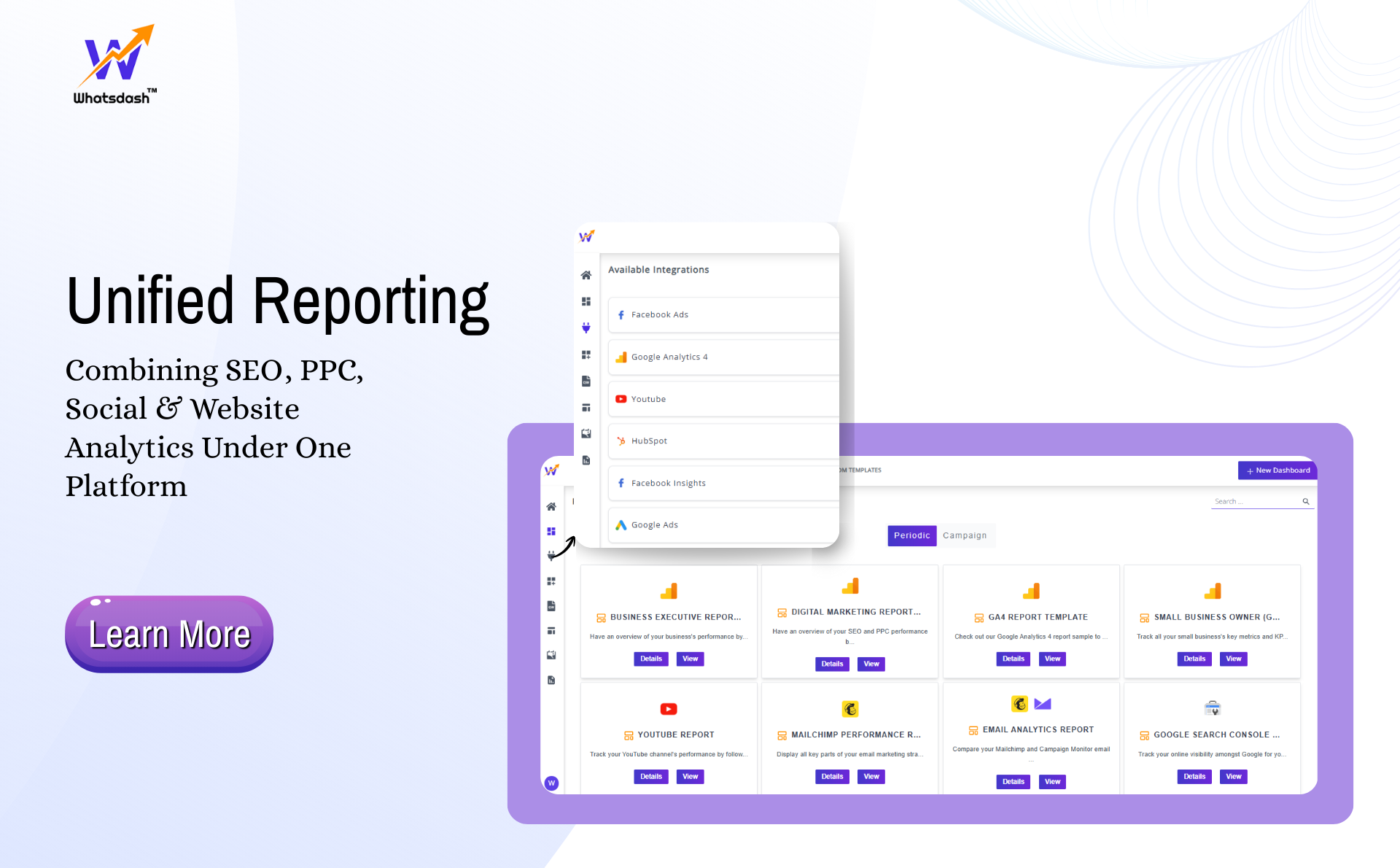
Whatsdash is a practical example of a platform that facilitates unified reporting by bringing SEO, PPC, social media, and website analytics into one cohesive dashboard. It excels in:
- Seamless integration with multiple marketing tools and platforms
- Easy-to-understand visual reports customizable for different needs
- Real-time data refresh to keep decision-makers informed promptly
Such platforms make it easier for marketing teams and agencies to manage complex campaigns without juggling multiple tools and interfaces.
Best Use Cases for Unified Reporting Platforms
- Marketing agencies: Delivering comprehensive client reports that combine multiple channels with minimal manual effort.
- E-commerce businesses: Tracking the impact of SEO, paid ads, and social media for your ecommerce business and website sales in one view then a unified reporting dashboard is the best option for you because tracking different things in different tools is literally a challenge. But in this case you can try Whatsdash shopify reporting platform.
- Large enterprises: Coordinating cross-departmental strategies with centralized data visibility.
- Small to medium businesses: Gaining maximum insights with limited marketing resources.
Why Unified Dashboard Reporting is a Game-Changer
Unified reporting platforms empower businesses to turn scattered marketing data into a single source of truth. This streamlines operations, accelerates insights, and drives more effective marketing investments. Solutions like Whatsdash embody the practical benefits of this approach — helping teams focus more on optimizing results and less on assembling reports.
Optimize your marketing analytics with a unified reporting dashboard and unlock deeper insights across SEO, PPC, social, and website data. Explore integrating such platforms to save time, improve collaboration, and make smarter decisions.
Conclusion
This article offers realistic and actionable advice for marketing professionals seeking to simplify and unify their reporting processes to drive business growth. It balances technical detail with strategic benefits, avoiding over-promotion while subtly referencing Whatsdash as a practical solution. The main keyword density is maintained naturally to enhance SEO without overuse.